Abstract
The absence of any reference to environmental factors in the refugee definition established by the 1951 Geneva Convention generally leads to a search for legal grounds for the protection of persons displaced by climate change outside the framework of international refugee law. However, this approach warrants reconsideration in light of African regional law. By extending refugee status to persons compelled to leave their country due, inter alia, to events seriously disturbing public order, Article I(2) of the 1969 OAU Refugee Convention introduces a criterion whose scope does not necessarily appear to be confined to the political and security circumstances that motivated its adoption.
The difficulty lies less in the absence of an explicit reference to environmental phenomena than in the conditions under which their consequences may be legally characterised as events seriously disturbing public order. While a disaster or the gradual degradation of the environment cannot, in itself, automatically confer refugee status, the resulting disruption of the collective conditions of existence could, in certain circumstances, fall within the scope of this provision.
Drawing on the rules of treaty interpretation, UNHCR guidance, and the practice of African States, this paper seeks to examine the conditions under which the expanded refugee definition may apply to environmental and climate-related displacement. The analysis will focus primarily on the threshold of severity required for a disturbance of public order, the relationship between such a disturbance and the involuntary nature of displacement, and the difficulties involved in assessing these elements in situations where multiple drivers of human mobility intersect. Ultimately, the paper aims to assess the extent to which the limitations of protection under the Convention arise from the content of the legal provision itself or from the conditions governing its interpretation and application by African States.
About the speaker
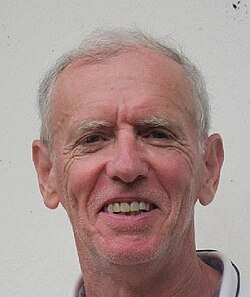
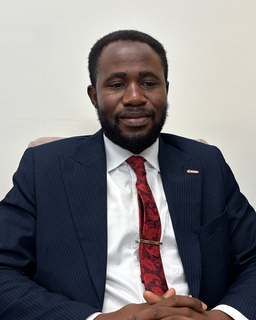
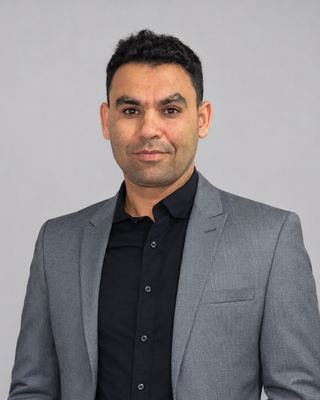
Dr Gabriel Ajabu Mastaki, a national of the Democratic Republic of the Congo, holds a PhD in Law from the University of Burundi, prepared under joint supervision with UCLouvain and Université Paris Cité. He is currently completing a second doctoral thesis in Legal Sciences at UCLouvain.
He is a researcher at the Centre Charles De Visscher pour le droit international et européen (CeDIE), within the Équipe droits et migrations (EDEM), UCLouvain, Belgium.
His research interests include international human rights law, international environmental law, international migration law and the legal protection of persons displaced in the context of climate change.
UCLouvain, CeDIE/EDEM, Place Montesquieu 2, 1348 Louvain-la-Neuve, Belgium.